'It's like influencer heaven': how Manchester became a hotspot for TikTok content creators
A new generation of social media influencers is thriving in Manchester, drawn by its walkable centre, young population and "Mancunian swagger." But economists warn the city's growth miracle may be overstated.
On this page(3)
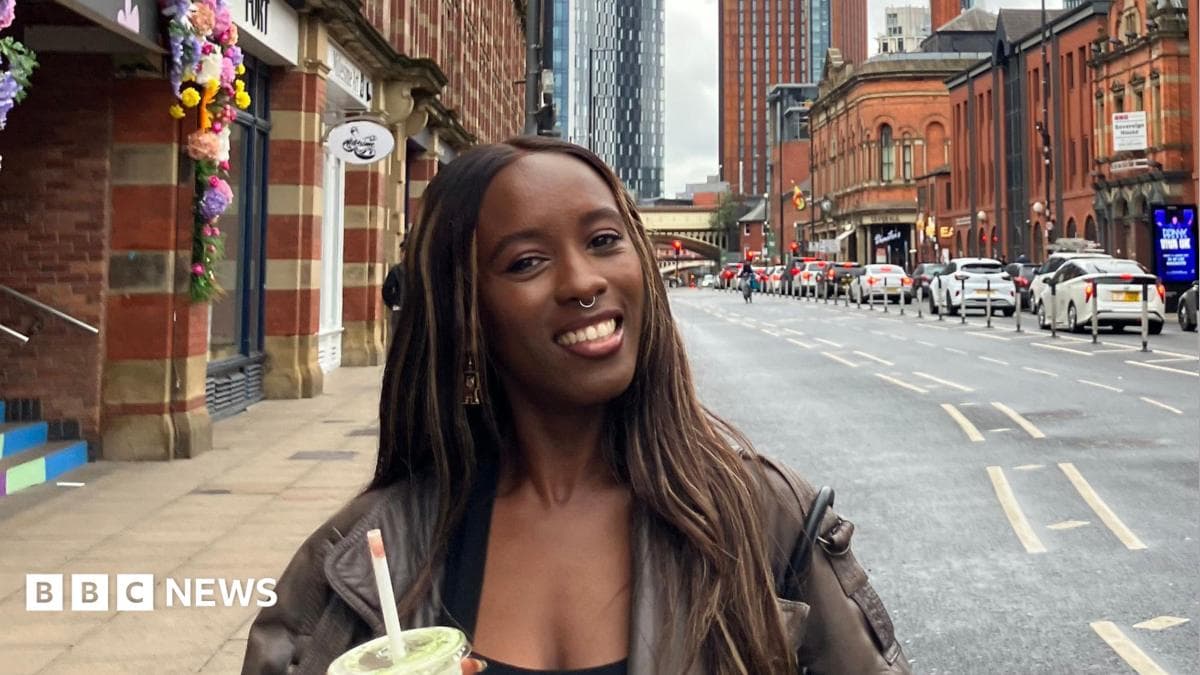
Towers of luxury apartments loom over waterside bars beside Deansgate-Castlefield station. On hot sunny days, the area is packed. "Everyone is always there during the summer," says Ruwaydah, a 33-year-old content creator who posts reviews of Manchester cafes, restaurants and date spots. "It's like influencer heaven."
She began making TikTok videos about her favourite places six years ago after moving from London into one of the city's sky-scraping apartments. Her secret? Manchester's compactness. "I can walk everywhere in 30 minutes," she says. "I never feel like anything is too far away." That accessibility encourages her to post more often, and her audience has grown steadily since she left London.
The success of her TikTok led Ruwaydah to set up a social events business, which she plans to expand next year. "This has all started from Manchester," she says. "The vibe of Manchester is everything. And I think you need to be here and experience it to get that."
Why Manchester?
The city has a young and growing population hungry for recommendations. Census data from 2021 shows the largest age group was 20 to 24-year-olds, with the total population increasing by 9.7% since 2011. There are about 70,000 students living in the city, and an analysis by consultancy ING found Manchester was the joint fastest-rising city in Europe for online mentions last year.
Paul Swinney, chief economist at The Data City, traces the boom back to the 1990s, when the council under Sir Howard Bernstein invested in clearing old buildings, converting them and constructing new office space. National and international businesses set up outposts, luxury apartments were built to house the workers, and bars, restaurants and cafes were established to entertain them.
Who are the creators?
Harry, 23, from Chester, works at a solicitors' firm near Piccadilly and began posting about his revision, fitness and nutrition routines on TikTok last autumn. He says something about Manchester gave him the confidence to start. "It's a swagger," he says. "It's so distinctly Mancunian. People here are just different."
Sufia, 25, moved from New Zealand three years ago and planned to stay temporarily. Then her dance class videos took off on TikTok. "We've been sold out for seven months," she says. She left her marketing job in February to focus on the business full-time. "Northerners are so friendly. I've felt so welcomed."
Lamar, 29, moved from Milton Keynes to Trafford and makes TikTok videos about personal finance and investing. He sold his car because the tram network is so good. "There's about four tram stops within a 15-minute walk," he says.
Is the economic story really that good?
Swinney cautions that Manchester's "growth miracle" has been overestimated by official statistics. "There hasn't been this huge explosion of productivity," he says. Median average wages in Greater Manchester have only increased by 1% since 2019 when adjusted for inflation.
There are also concerns about high-rise apartments requiring safety repairs, with one developer taken to court by the government in April for using taxpayers' money for remedial works.
Andy Spinoza, author of Manchester Unspun, sees a deeper cultural explanation. "There's this thing called Mancunian exceptionalism, which is 'we're the best city in the world and everyone else can do one,'" he says. He describes the current wave of young people living in city-centre towers as "a social experiment of, mainly young, people living in the sky."
Frequently Asked Questions
- Why are influencers moving to Manchester?
- Many content creators cite the city's compact, walkable centre, vibrant hospitality scene, and strong public transport links as key reasons for living and filming in Manchester.
- How much has Manchester's population grown?
- According to the 2021 Census, Manchester's population increased by 9.7 per cent since 2011, with 20 to 24-year-olds making up the largest age group.
- Has Manchester's economy grown alongside its population?
- While the city has seen significant redevelopment and a shift to a service-driven economy, experts note that inflation-adjusted median wages in Greater Manchester have only risen by 1 per cent since 2019.