Around 600 march through Manchester city centre for International Youth Strike under police restrictions
An estimated 600 young people and students marched from Oxford Road to St Peter's Square on Friday. Greater Manchester Police imposed rare legal conditions and said no arrests were made.
On this page(3)
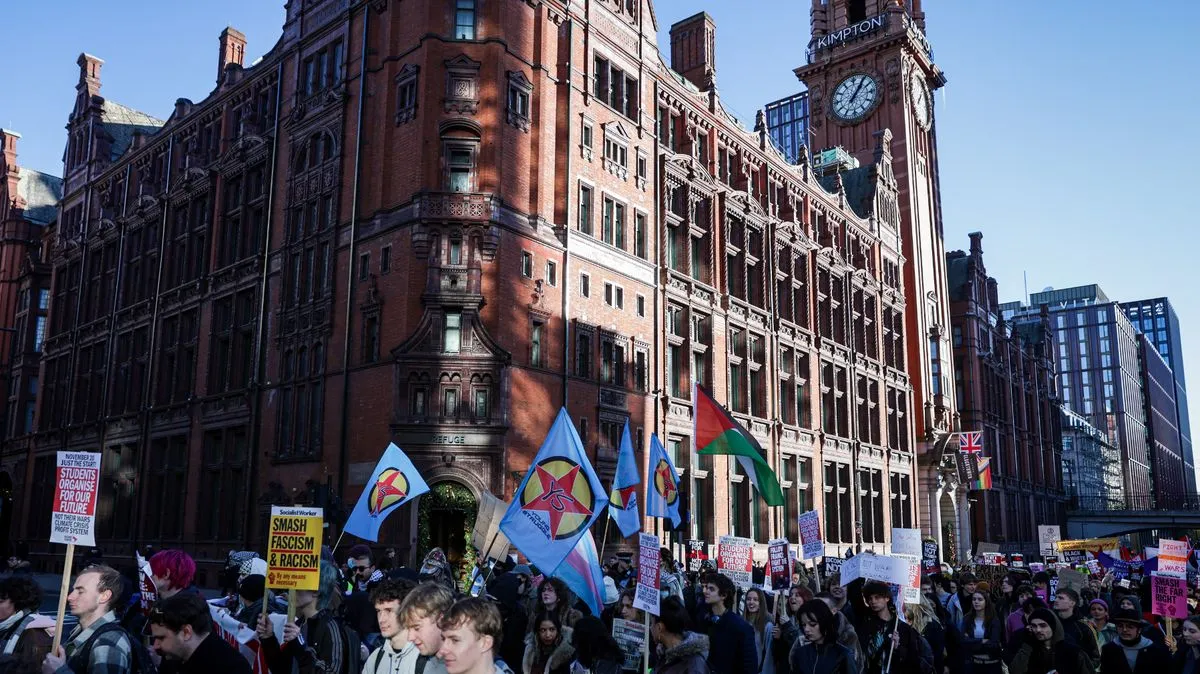
An estimated 600 young people and students marched through Manchester city centre on Friday, November 20, as part of the nationwide International Youth Strike (IYS) rallies.
What Happened?
Protesters met near the Whitworth Arch on Oxford Road, where speeches were held before the march set off around midday. Placards read “books, not bombs”, “smash the Far Right” and “trans rights now”, while chants included “austerity has got to go”. Speakers covered the cost of living, free education, the NHS and young people not in education, employment or training. The Stop the War Coalition was among the groups involved.
The march made its way down Oxford Road, past the Palace Theatre, before reaching St Peter's Square for further speeches. Greater Manchester Police (GMP) said there was brief disruption to tram services as the march arrived, but that they resumed as normal.
What Restrictions Did Police Impose?
GMP said it had not received any written notice of the protest and so had not been able to identify an organiser. It imposed conditions under Section 14 of the Public Order Act 1986, meaning protesters could not gather in Albert Square or Lincoln Square after the march, and were told to assemble in St Peter's Square instead. Speeches and music had to finish by 4.30pm, with the rally ending by 5pm.
Officers also had the power to direct people to leave an area of the city centre between 10am and 9pm. Assistant Chief Constable Mark Dexter said ahead of the event: “Implementing conditions under Section 14 of the Public Order Act is a rare but necessary step to prevent serious disruption to the lives of people who will be going about their daily business.” He added that the area between Number 10 North and the Christmas Markets in Albert Square has limited capacity.
What Have Police Said Since?
In a statement issued once the event had ended, GMP said the protest had passed peacefully and that no arrests had been made. Dexter said: “We took the rare step of imposing legal conditions on today's activity and I'd like to thank people involved in the rally for their cooperation throughout.”
He added: “I'd also like to thank the wider public for their patience during our work to keep people safe.” He said the planning had “resulted in no serious disorder or arrests.”
Frequently Asked Questions
- How many people took part in the Manchester youth strike march?
- An estimated 600 people took part, according to journalists at the scene and Greater Manchester Police.
- Were there any arrests?
- No. Greater Manchester Police said the protest passed peacefully with no arrests and no serious disorder.
- What police restrictions were in place?
- Under Section 14 of the Public Order Act, protesters could not gather in Albert Square or Lincoln Square. Speeches had to end by 4.30pm, the rally by 5pm, and officers had dispersal powers until 9pm.