Andy Burnham Says UK and EU Will Spend a Year 'Brainstorming' Future Ties After New Deal
Prime Minister Andy Burnham struck three agreements with Brussels on food, carbon taxes and youth visas, and says the next year will be spent exploring the UK's future relationship with the EU.
On this page(3)
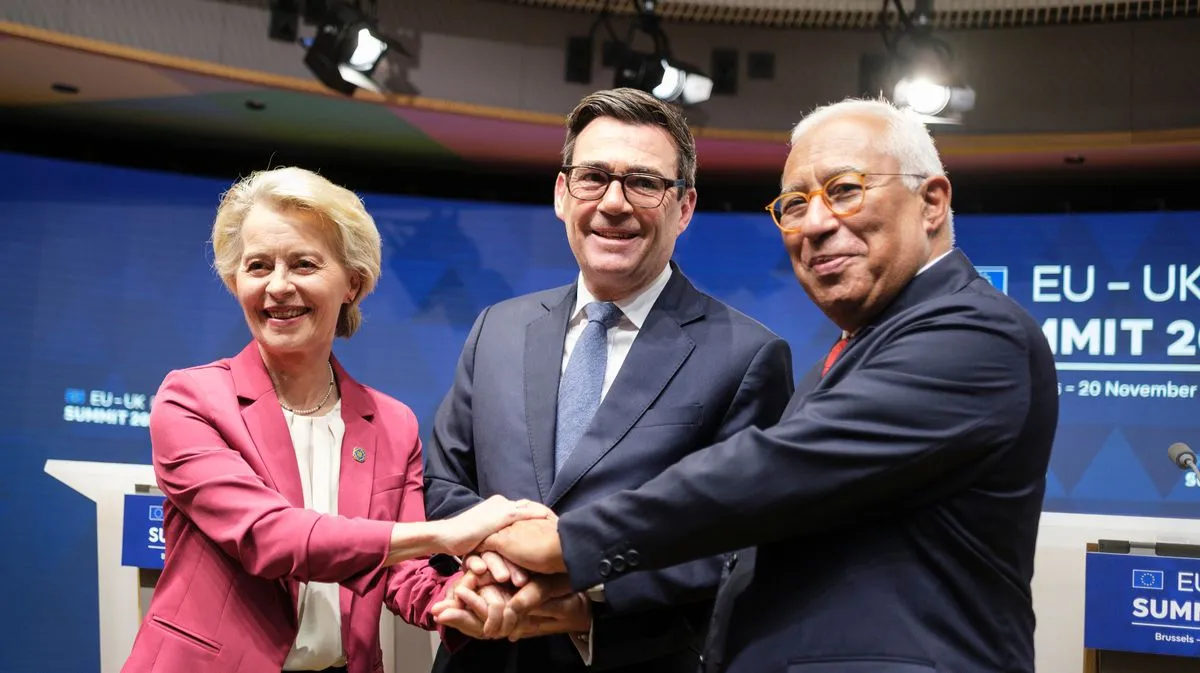
Prime Minister Andy Burnham has paved the way for closer ties with the European Union, having struck a deal that is the biggest step towards the bloc since before Brexit. He said the next 12 months would be spent “brainstorming” ideas with the EU for the future relationship.
Incremental steps “only take us so far”, Burnham said, and he suggested the package agreed with Brussels was “probably the limit” of what could be achieved before the next general election. He is expected to set out his view on the options in his 10-year plan, due to be unveiled in December.
What Did Burnham Agree With the EU?
On Friday, Burnham made three significant agreements in Brussels. A food trading deal, officially a sanitary and phytosanitary (SPS) agreement, will end most post-Brexit checks and restrictions on food and agricultural products from 1 March 2028.
An emissions trading systems (ETS) agreement, applied from the start of 2028, will exempt £6.5 billion of British exports, including from the steel and aluminium industries, from EU carbon border taxes.
A youth experience scheme will let UK and EU citizens aged 18 to 31 live and work in each other's jurisdictions for up to three years, with 100,000 visas available each year. According to Government documents, the first young people will travel “no later than January 2030”.
The UK and EU also agreed a new “structured dialogue” on migration and closer work on the Channel action plan, aimed at the people-trafficking operations behind the small boats crisis.
What Is the Row Over Tuition Fees?
A potential stumbling block remains over tuition fees for EU students at British universities. A six-month deadline has been set to reach agreement after EU member states called for their students to be charged the same rate as British students. That would mean a cut from fees of up to £38,000 a year to £9,970, something the UK has resisted because of the financial impact on universities.
The row led to doubts in Brussels about whether the rest of the deal could be implemented, though Burnham insisted there was “no confusion” about it.
How Have Others Reacted?
European Council president Antonio Costa said the bloc was “open to have the closest possible relationship” with Britain, but stressed the EU's commitment to single market rules, which include freedom of movement.
Burnham's opponents were less welcoming. Reform UK leader Nigel Farage suggested the Prime Minister had gone “completely against” a pledge he made to voters in the Makerfield by-election not to re-run Brexit arguments. Conservative leader Kemi Badenoch warned the youth scheme risked making competition for jobs fiercer.
Writing in the Daily Mail, former Tory minister Michael Gove said: “The 'deal' he concluded with the European Union yesterday takes Britain backwards, back to more migration from the EU, back to the EU setting rules for British businesses we can't veto, back into the interminable process of seeing Brussels expand its reach into all our lives.”
The Times reported that the Prime Minister is determined to return the UK to the EU. A person described as a senior ally of Burnham told the paper: “He wants to rejoin. That's the truth of it. He feels it very deeply and thinks he is on the right side of public opinion.” The claim is anonymous and has not been confirmed by the Government.
Frequently Asked Questions
- What did Andy Burnham agree with the EU?
- Three deals: a food trading (SPS) agreement ending most post-Brexit checks from 1 March 2028, an emissions trading agreement exempting £6.5 billion of exports from EU carbon taxes, and a youth experience scheme.
- How will the youth experience scheme work?
- UK and EU citizens aged 18 to 31 will be able to live and work in each other's jurisdictions for up to three years, with 100,000 visas a year. The first travellers will go no later than January 2030.
- What is the dispute over tuition fees?
- EU member states want their students charged the same rate as British students, cutting fees from up to £38,000 to £9,970 a year. The UK has resisted because of the cost to universities, and a six-month deadline has been set.